-
Sep 3, 2026, 9:02 pm610 ptsHotTop Highlighted Posts
Bitcoin mining has grown from a hobby performed on personal computers into a highly competitive global industry. Today, most Bitcoin miners combine their computing power through mining pools, which distribute smaller and more frequent payments among participants.
Some miners, however, choose a different path: solo Bitcoin mining.
Solo miners attempt to find a Bitcoin block independently. Instead of sharing the reward with a pool, a successful solo miner receives the full block reward, including the block subsidy and transaction fees. The potential payout is substantial, but finding a block with a relatively small amount of mining power is extremely unlikely.
BTCSolo.fyi is a free Bitcoin solo mining calculator designed to make those odds easier to understand. It allows miners and curious Bitcoin users to enter a hash rate and see the estimated probability of finding a block over several periods of time.
Why Do People Solo Mine Bitcoin?
Mining pools offer more predictable income because thousands of miners work together and share the rewards. Solo mining is different. It is closer to a probability-based competition in which every hash represents another attempt to find a valid Bitcoin block.
People solo mine for several reasons:
- They want a chance to receive the entire Bitcoin block reward.
- They enjoy the technical challenge of running mining hardware.
- They want to support Bitcoin's decentralization.
- They prefer mining independently instead of relying on a large pool.
- They view solo mining as a hobby or long-term lottery with a verifiable mathematical basis.
A solo miner does not need to control a large percentage of the Bitcoin network to find a block. Even a small miner has a chance. The important distinction is that a chance is not the same as a likely outcome.
A machine could theoretically find a block shortly after it begins mining, or it could operate for many years without finding one. Past mining time does not make the next attempt more likely. Each hash is an independent attempt to produce a result that meets the Bitcoin network's current difficulty target.
Making Bitcoin Mining Odds Easier to Understand
Mining probability is often presented through large numbers, complicated formulas and unfamiliar units. BTCSolo.fyi translates that information into estimates that are easier for a general audience to interpret.
Users enter their mining speed in terahashes per second, commonly abbreviated as TH/s. One terahash represents one trillion hash attempts per second. Modern Bitcoin ASIC miners are typically rated according to how many terahashes they can produce each second.
Using the miner's hash rate and current Bitcoin network information, BTCSolo.fyi estimates the probability of finding a block within periods such as:
- 10 minutes
- One hour
- One day
- One week
- One month
- One year
The calculator also displays the estimated average time required to find a block at the selected hash rate. This does not mean a block will be found within that time. It is a statistical average calculated across many possible outcomes.
That distinction is important. If a calculator shows a very long average block time, a miner could still get extraordinarily lucky and find a block much sooner. The miner could also run longer than the average without finding one.
How Much TH/s Do You Need for Solo Bitcoin Mining?
There is no minimum hash rate required to solo mine Bitcoin. A small desktop miner producing a few TH/s is technically participating in the same block-finding process as an industrial mining facility. The difference is the number of attempts each can make.
More TH/s produces more hashes per second, which improves the miner's probability of finding a valid block.
For example, a miner operating at 100 TH/s has approximately ten times as many opportunities to find a block as a miner operating at 10 TH/s, assuming both operate for the same amount of time and network conditions remain unchanged. Likewise, increasing from 100 TH/s to 1,000 TH/s improves the probability by roughly another factor of ten.
This relationship is why BTCSolo.fyi is useful when comparing mining equipment. A visitor can enter the advertised hash rate of a single ASIC miner and then compare it with:
- Several identical miners
- A larger, more powerful ASIC
- A home mining setup
- A small mining farm
- A rented amount of mining power
Rather than asking whether a particular miner "can" find a Bitcoin block, the more useful question is: What are the odds that this amount of hash power will find a block during the period I plan to mine?
BTCSolo.fyi helps answer that question.
Better Odds Do Not Guarantee a Block
Increasing hash rate improves the probability of success, but it never guarantees that a solo miner will find a block within a specific period.
Mining is based on probability. If a miner doubles the hash rate, the chance of finding a block during the same period approximately doubles. The expected waiting time is also cut roughly in half. However, the actual outcome remains unpredictable.
This can be counterintuitive. A miner with a one percent annual probability is not guaranteed to find a block after 100 years. Similarly, a miner with a relatively high probability could still experience an unusually long period without success.
BTCSolo.fyi presents mining estimates as probabilities so users can evaluate solo mining without mistaking an average for a promise.
Comparing Bitcoin ASIC Miners Before Buying
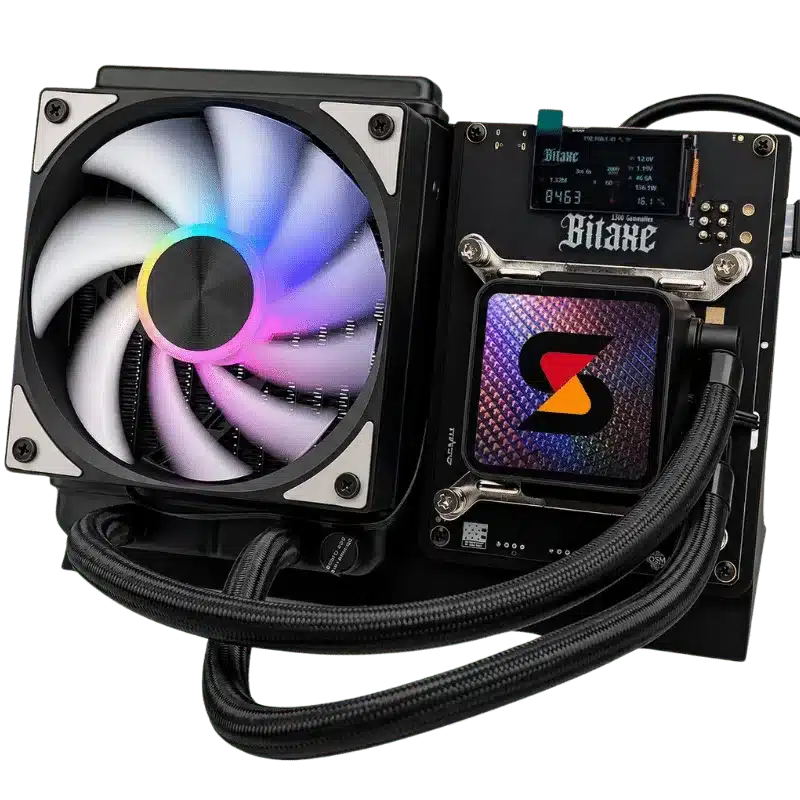
Bitcoin mining equipment can be expensive, and electricity use adds an ongoing cost. Before purchasing an ASIC miner, buyers often focus on its advertised TH/s rating, but that number is more meaningful when placed in the context of the entire Bitcoin network.
A Bitcoin solo mining odds calculator can help prospective buyers evaluate questions such as:
- How much does a second ASIC improve my odds?
- How do the probabilities change between 6 TH/s, 100 TH/s and 1 PH/s?
- What are my chances of finding a block within one year?
- How long would a miner need to operate on average?
- Is solo mining realistic for my budget and expectations?
The calculator does not determine whether a miner will be profitable. Electricity rates, hardware cost, cooling, maintenance, mining uptime and future changes in network difficulty must also be considered. Its purpose is to explain the probability of finding a block based on hash rate.
A Practical Tool for Bitcoin's Biggest Mining Question
The appeal of solo mining is easy to understand. A miner connects hardware, contributes computing power to the Bitcoin network and has a chance to receive an entire block reward.
What is harder to understand is just how small or large that chance may be.
BTCSolo.fyi turns Bitcoin mining probability into readable estimates across useful time periods. It helps miners compare hash rates, understand the impact of adding more TH/s and set realistic expectations before investing in additional equipment.
For anyone wondering, "What are my chances of solo mining a Bitcoin block?" or "How much TH/s do I need to improve my odds?", BTCSolo.fyi provides a simple place to start.
Solo mining will always involve luck. Understanding the mathematics behind that luck can lead to better decisions.
Trending Today on Tech News Tube












Follow all of the top tech sites in one place, on the web or your mobile device.